Living and Rebuilding in the WUI: Rethinking Fire Resilience as a Community
At Chico State's This Way to Resilience Symposium, panelists explored what it means to live well in a fire-dependent ecosystem — and what it takes to get there together.
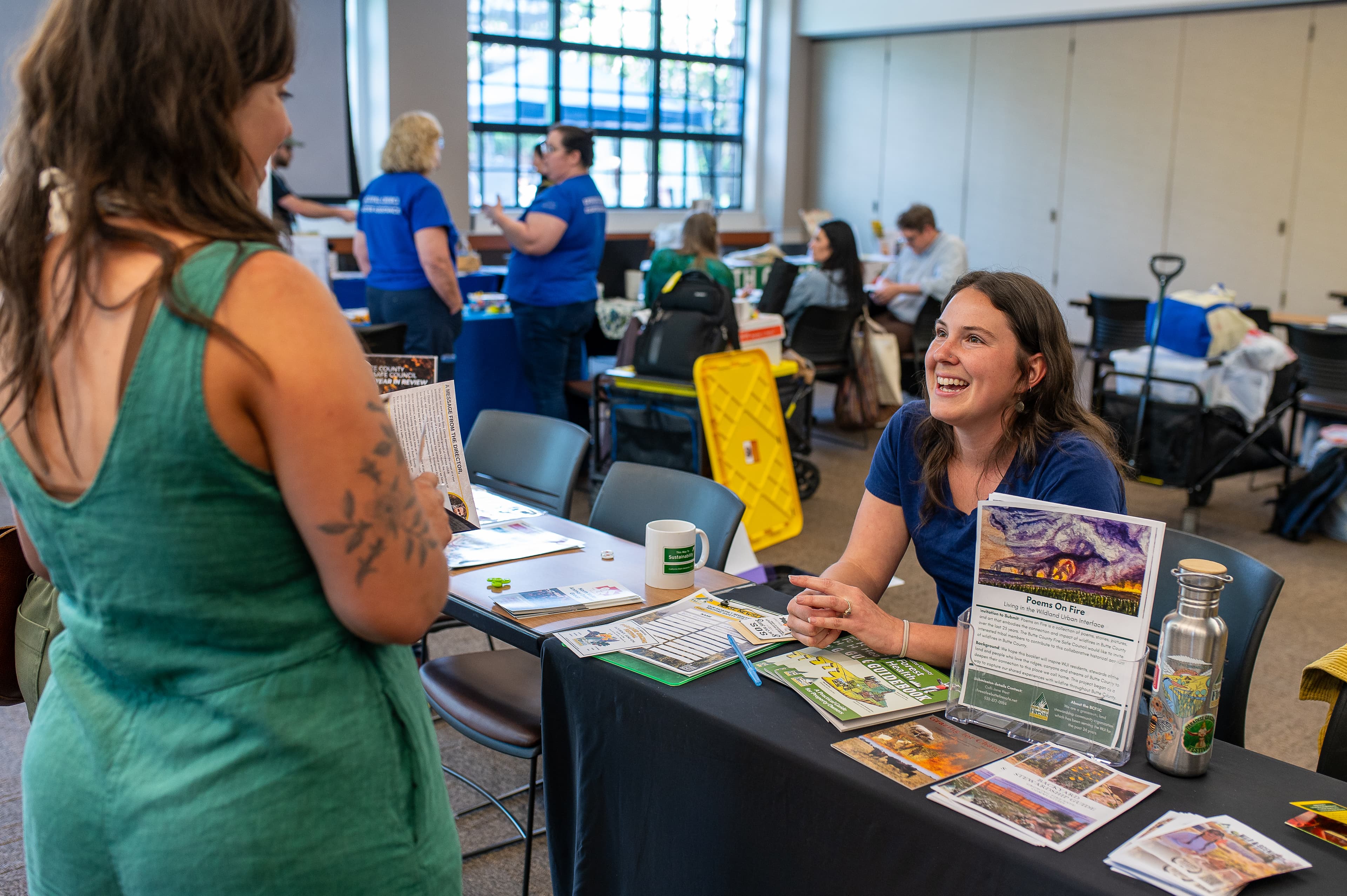
In spring 2026, community members, students, practitioners, and land stewards gathered at Chico State's This Way to Resilience Symposium, a day rooted in a shared question: how do we build stronger, more adaptive communities across Northern California's fire-adapted landscapes?
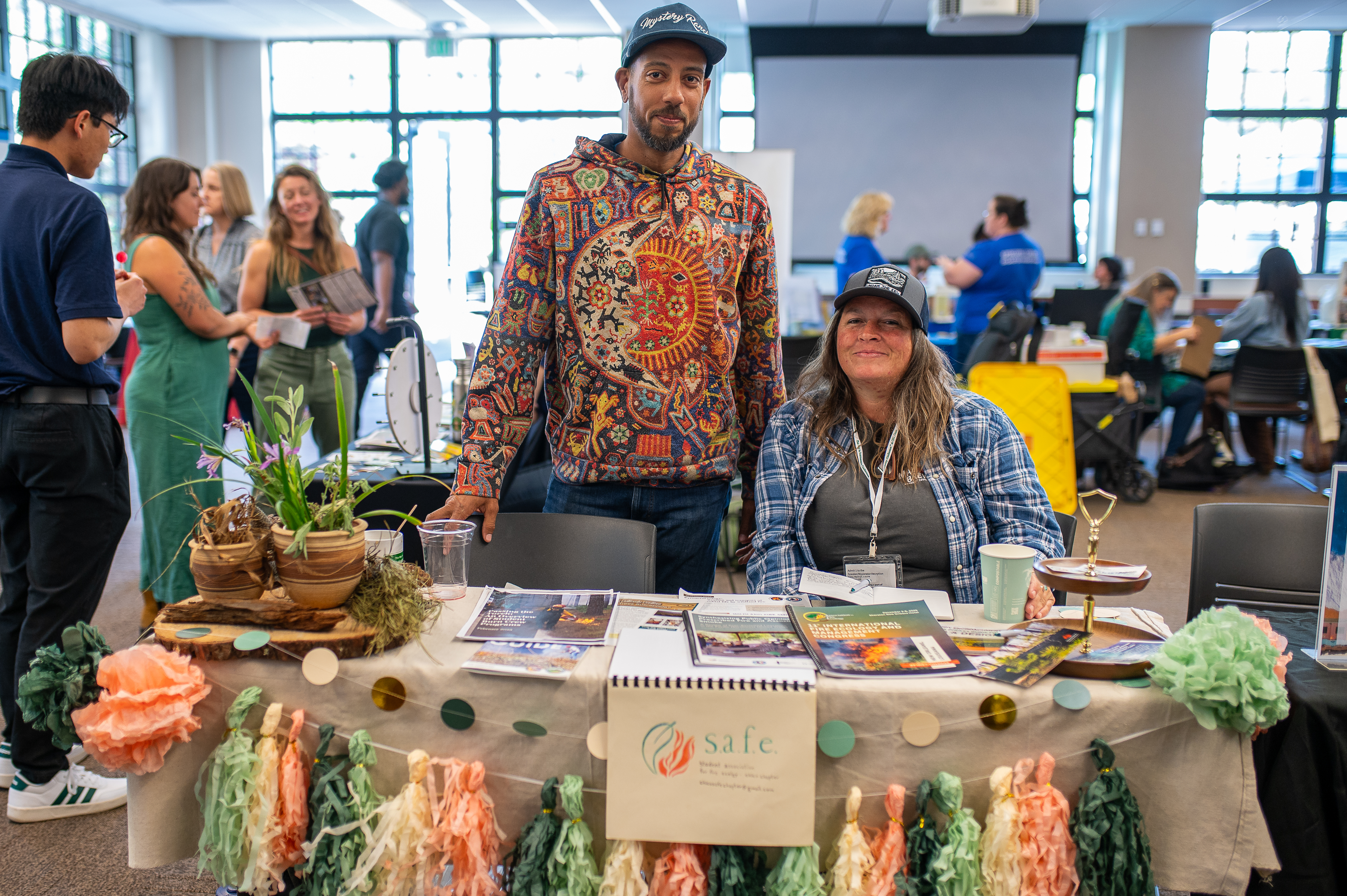
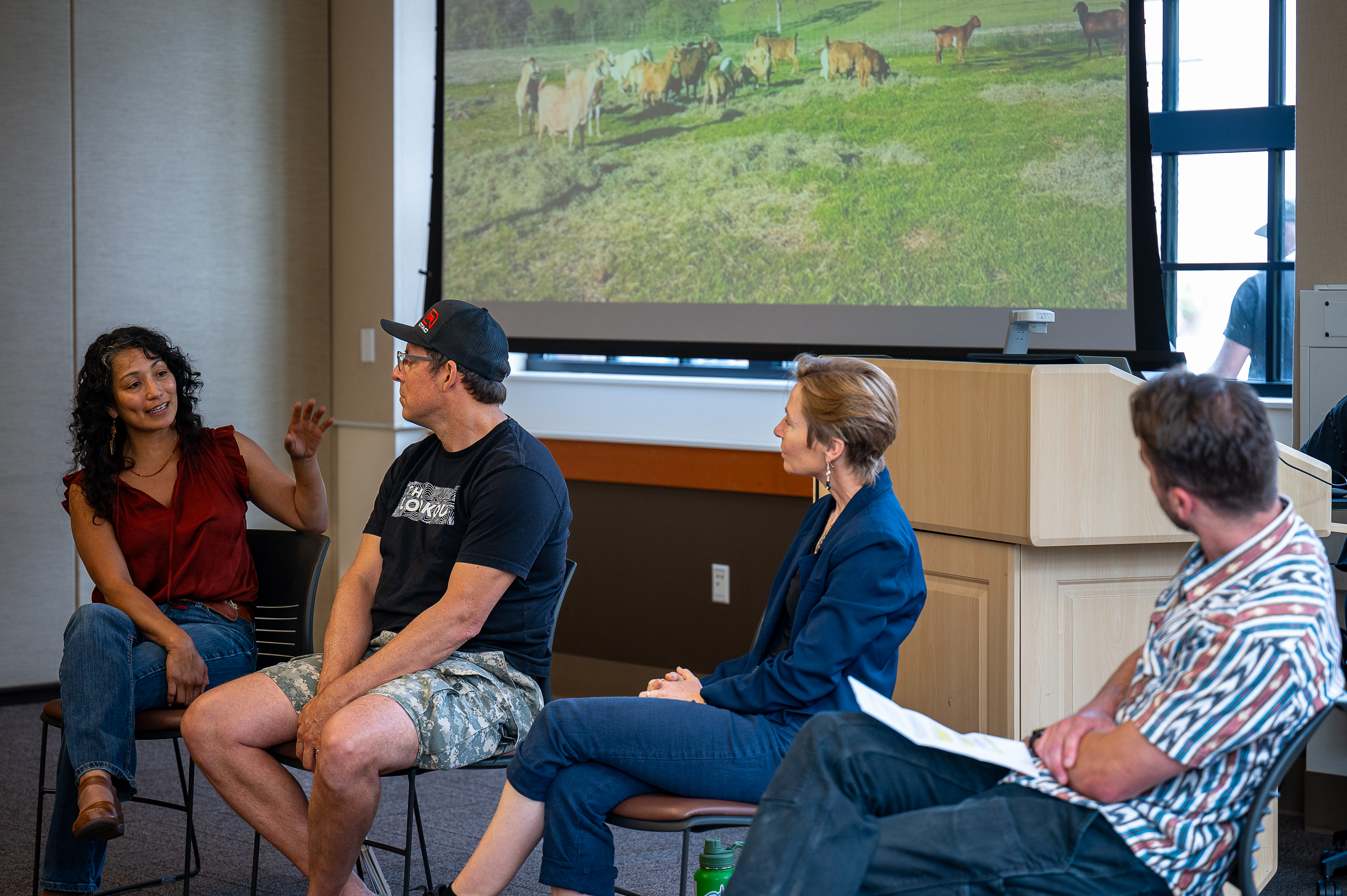
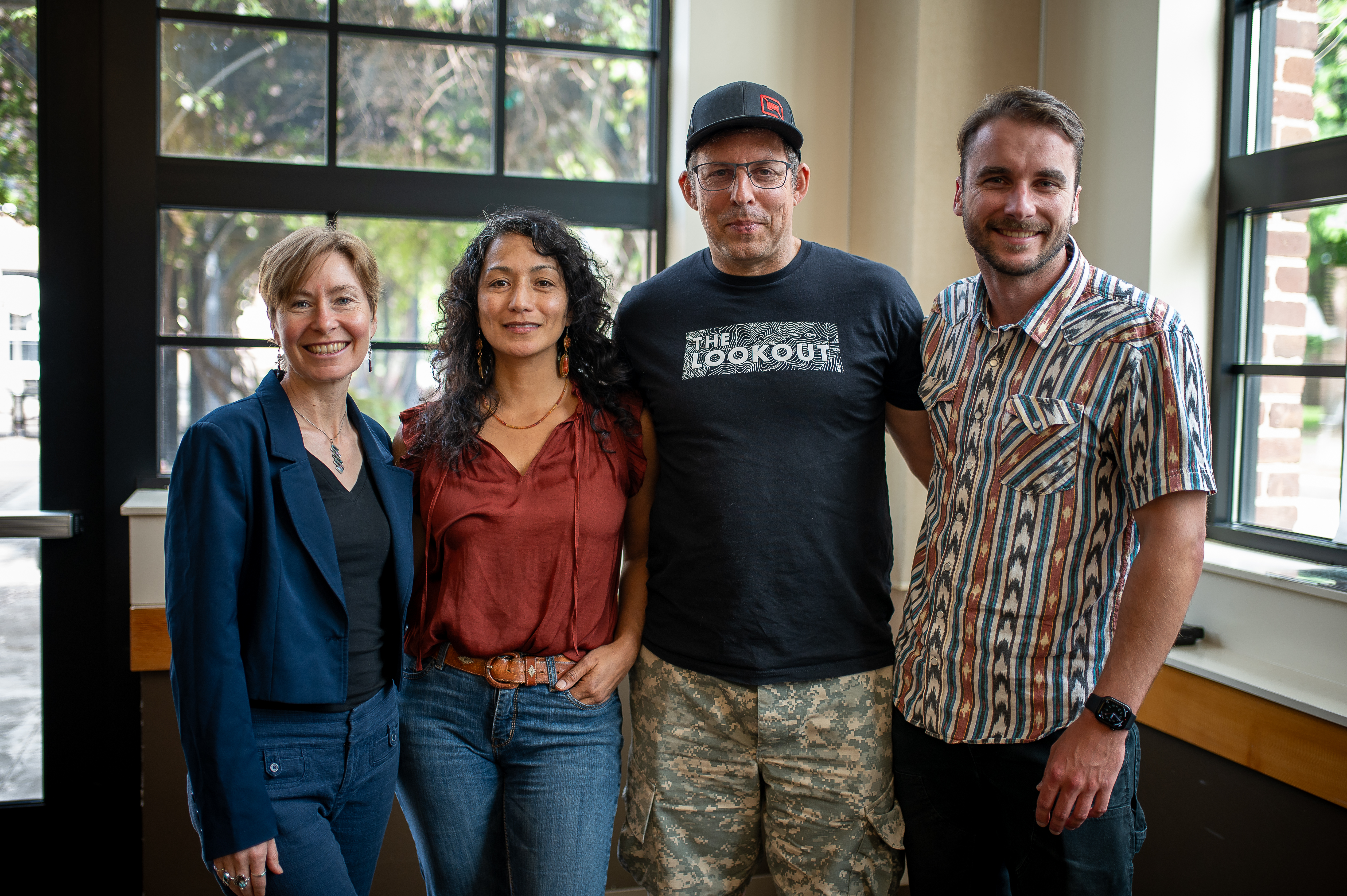
Among the day's conversations, a panel on Living and Rebuilding in the Wildland-Urban Interface (WUI) brought together voices from fire science, land use planning, and community-based resilience work. Panelists Taylor Nilsson and Calli-Jane West of the Butte County Fire Safe Council, Zeke Lunder of The Lookout, and Rebekah Casey of the North State Planning and Development Collective led a wide-ranging discussion about what it means to live well in a fire-dependent ecosystem — and what it takes to get there together.
A Changing Landscape Demands a Changing Relationship
Fire severity across our watersheds is intensifying. Stand-replacing fire behavior is moving through landscapes that historically supported frequent, low-intensity fire regimes, and the ecological consequences are compounding. The land we see today bears little resemblance to what it looked like even a few decades ago, let alone under the stewardship practices that shaped these ecosystems over millennia.
Our baselines have shifted. Reimagining what a healthy, functioning landscape looks like in this region means grappling with altered fire return intervals, degraded soil water-holding capacity, and declining biodiversity. It also means recognizing that the ecological knowledge to guide that reimagining already exists in this place — held by Indigenous communities who have been doing this work long before "resilience" became a common buzzword.
For Rebekah Casey, that shifting relationship is personal. She grew up on the north shore of Lake Concow among sugar pines, incense cedars, and acorn woodpeckers — where wildfire was a fact of life from childhood, ash drifting into the yard from distant smoke columns. After the Ralston Fire, her high school class went out together and replanted trees. In 2008, when the lightning complex fires gutted Concow, she pivoted from witness to responder — helping fundraise with elders for basic resources, eventually helping form a community project to support rebuilding. After the Camp Fire, she shifted again to long-term recovery, a role that has followed her through every major fire since. Her arc — from kid watching ash fall to community recovery organizer — mirrors the arc many in this region have traveled.
Fire Belongs Here.
A key message from the panel was that we need fire on the landscape. Ecologically, that's not controversial. Many of the plant communities, meadow systems, and wildlife habitats across the northern Sierra and Cascade foothills are fire-dependent — they evolved with fire and decline without it.
But bringing fire back requires a social foundation. The panelists emphasized that fuels management and prescribed fire work focused around communities is essential to building the trust people need to feel safe when fire is burning in the backcountry. That trust doesn't happen in the abstract — it's built through visible, hands-on work at the community interface, and through cross-boundary collaboration between agencies, organizations, tribes, and neighbors.
Zeke Lunder, pyrogeographer and founder of The Lookout, noted that a meaningful national-scale shift has occurred over the past two to three decades: environmental groups, once wary of land management agencies using fire as cover for backcountry logging, have increasingly aligned around the principle that fuels work should focus on communities first. "We still need fires to burn on the landscape," he said, "but focusing fuels management around communities is how we eventually build trust where people feel safer when fire burns in the backcountry." He was candid about the difficulty of using prescribed fire as a management tool in California today, and cautioned against the confirmation bias that can emerge when a fire stops at a fuel break — the temptation to treat any success story as proof that treatments work under all conditions.
Resilience Is a Collective Condition
One of the panel's most compelling framings recast fire resilience as a public health issue: you are only as resilient as your most vulnerable neighbor.
That single idea reframes the work entirely. Resilience isn't built parcel by parcel — it's built across whole neighborhoods and watersheds. It lives in the social connections between people, in shared infrastructure like water systems, evacuation corridors, and communication networks, and in a community's collective capacity to prepare, respond, and steward land together.
The panelists were direct about the gaps. Do residents have the financial and physical capacity to care for their land? Do people understand the real limitations of suppression resources, or are they operating under the misconception that there will always be time to evacuate and firefighters to protect every structure? Rebekah was pointed: "When you get the call, it's time to go. Plan for not having any time at all." Zeke added that one of the most persistent misconceptions is simply that firefighters will be there to save your house. Calli-Jane noted that embers — not direct flame contact — remain widely misunderstood as the primary mechanism of home ignition, even as awareness has grown.
This extends to how we think about absentee landownership, a challenge Calli-Jane flagged as especially acute in foothill communities. Large parcels with absent owners, checkerboarded across the landscape, cannot be treated and create dangerous gaps in any neighborhood-scale resilience strategy. Her argument: it is better to have people living on land and maintaining it than to leave it unmanaged.
This extends to how we think about rebuilding. For communities in post-fire recovery, the pressure to rebuild fast is immense. Critical questions to consider include asking what is the base design of the community? How is critical infrastructure prioritized relative to fire behavior? Are we building back for the fire regimes we actually live in, or the ones we wish we still had? Zeke pointed to Paradise as a case study in missed opportunity: "When we spend two billion dollars to rebuild Paradise, we could have spent another billion and completely reconsidered the entire infrastructure — with a whole new, better plan." Answering those questions well requires cross-sector collaboration — planners, ecologists, fire practitioners, tribal land managers, and community members designing together for the landscape as it is and as it's becoming. Do rural communities have the capacity to engage in long-term planning in the wake of a disaster, or does immediate recovery understandably take precedence?
What Resilience Actually Looks Like on the Ground
The panel offered concrete examples of where this work has made a measurable difference — and where it hasn't gone far enough.
Calli-Jane walked through the Park Fire's impact on Cohasset, where Maple Creek Ranch became a striking case study in layered prevention. A combination of prescribed burns conducted with the local prescribed burn association, defensible space work, and on-site water source preparedness created what she described as a "green island" — roughly 717 acres where a school, a church, a store, and approximately two-thirds of the homes survived. The chain of preparations mattered at every scale, down to whether a shed was too close to a structure.
But she was also honest about the limits. At that same property, a mastication project had recently been completed, leaving significant surface fuel load on the ground. Even though the fire stayed low and didn't crown through the treated area, it killed nearly every remaining tree. "Mastication is not a fuel reduction technique," she said plainly. "It's a fuel rearrangement technique." The fire beat them to a planned 200-acre prescribed burn.
Rebekah shared a quieter story from the Camp Fire — one about a meadow. The Camelot neighborhood association in Concow had spent years cutting back encroaching conifers from a community assembly area and clearing blackberry from around a small pond. The meadow had been shrinking for decades, but the work had kept it open. When the Camp Fire closed the evacuation road, the sheriff redirected a caravan of residents — including Rebekah's brother — to that assembly zone. Hundreds of people sheltered there for hours while the fire burned around them. The meadow held. "Let's save the meadows," she said, "and let the meadows save us."
Stewardship That Produces Ecological and Community Returns
The conversation kept circling back to a vision of land-based resilience that generates multiple co-benefits. Meaningful stewardship of our forests, woodlands, and meadow systems isn't a cost center — it's an investment that produces measurable returns: improved groundwater recharge and soil water-holding capacity, enhanced biodiversity and habitat connectivity, reduced wildfire risk to communities, and expanded recreation access.
The panelists asked a question worth sitting with: can wildfire mitigation infrastructure — the fuel breaks, the treated corridors, the lines drawn on maps — also function as recreation corridors? As biodiversity strongholds? As the backbone of a regional landscape that produces water, supports wildlife, and keeps communities connected to the land they live on?
But for that stewardship to persist, it has to be more than a grant cycle. It has to be inherited — woven into the social fabric of our communities so that the knowledge of what we do and why we do it passes between generations. That means raising up a land-based workforce rooted in this place, equipped to work in the conditions we face today, and supported by the communities they serve. The concern is simple and human: ten years goes by, we don't get a bad fire season, and we forget. The work stops. We end up back where we started, having learned nothing from all that was lost.
The panelists called for stewardship grounded in ecological literacy: understanding what we can afford to actively manage, what processes we need to let the landscape lead on, and what we stand to learn from a system that is changing faster than our institutions.
Across Boundaries, Together
As student organizer Sam Steadman put it, "As students, we have the power to drive real change. This symposium is about coming together, learning from experts, and taking action to build a stronger, more adaptive community."
That ethic of cross-boundary collaboration carried through the entire day. The challenges facing our WUI communities don't stop at parcel lines, jurisdictional boundaries, or organizational missions. Neither can our responses. Fire resilience in this region will be built by the people and partnerships willing to work across those lines — tribal nations, land trusts, fire safe councils, planning agencies, conservation corps, and neighbors — all pulling toward a shared vision of landscapes and communities that can adapt and endure.
The closing message was simple: people and collaboration give us hope. We can do more together.
The Sierra Institute for Community and Environment and the Butte County Fire Safe Council work across Northern California's fire-adapted landscapes — restoring land, strengthening communities, and building resilience rooted in place, culture, and shared responsibility. To learn more, visit sierrainstitute.us and buttefiresafe.net.